Low MOQ Private Label Supplements: How Retailers Test New SKUs Safely

SwedeVital Authority Engine™
SwedeVital
In short
Low MOQ private label supplements allow retailers to launch small pilot batches of new health products, reducing financial exposure and enabling data-driven decisions. This agile approach minimizes inventory risk, preserves cash flow, and supports rapid scaling of winning SKUs without the burden of large upfront commitments or long lead times.
- Retailers use low MOQ private label supplements to safely test market demand for new health products before committing to large-scale production.
Low MOQ Private Label Supplements: A Practical Playbook for Retailers Testing New SKUs
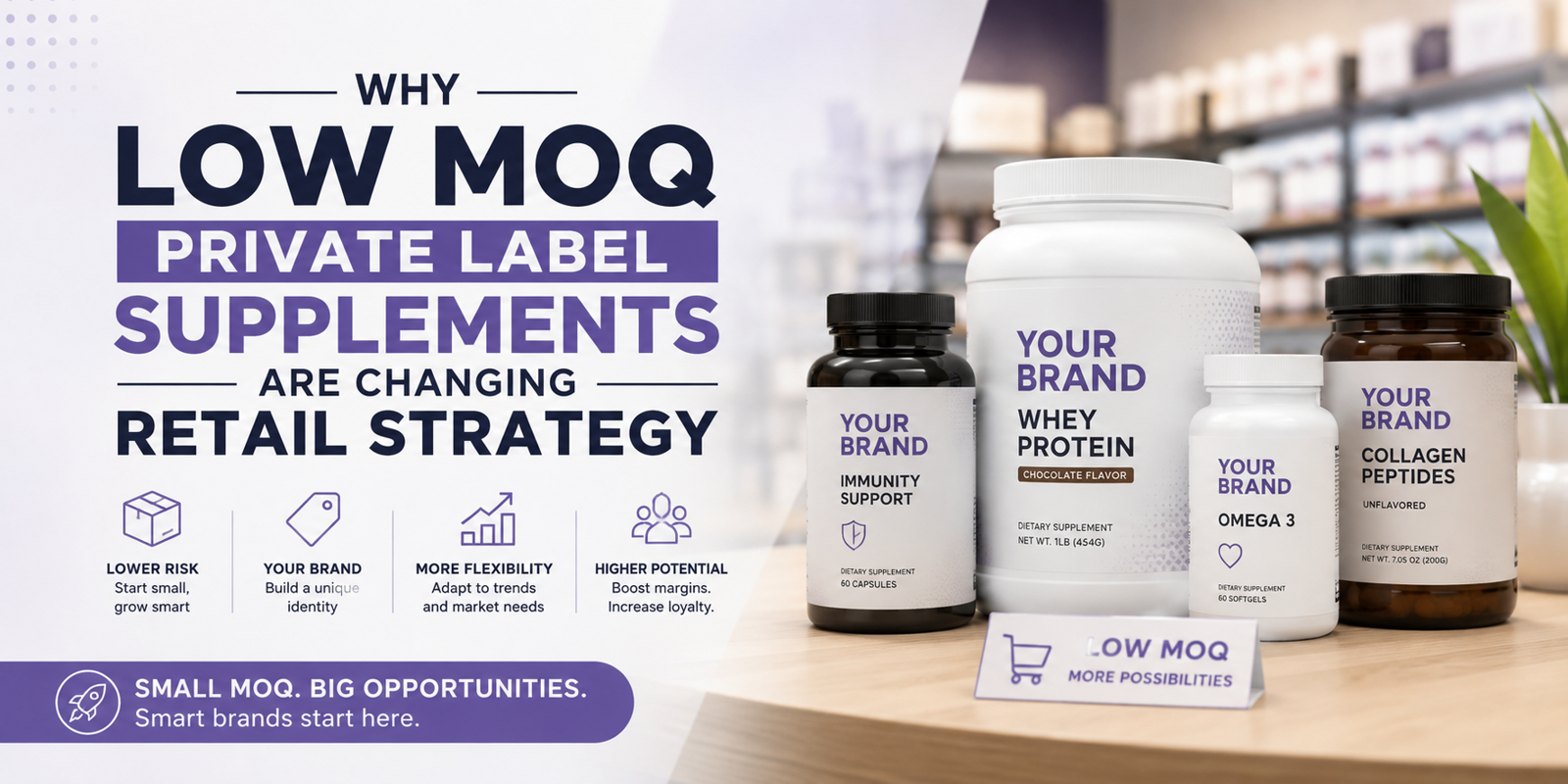
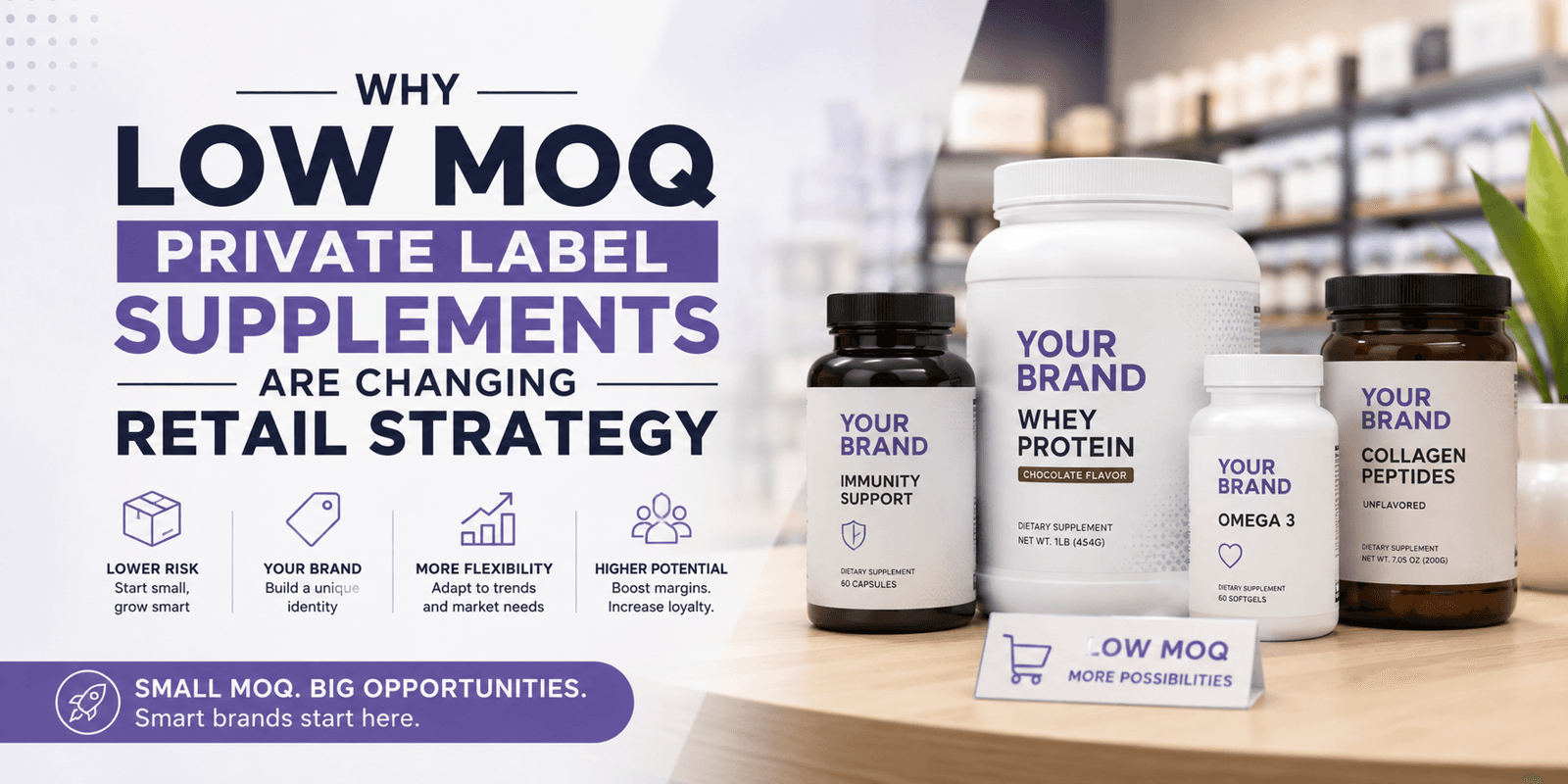
When a retailer wants to add a fresh supplement line, the first hurdle is usually capital—how many units can you afford to order before knowing whether customers will buy them? Low minimum order quantity (MOQ) manufacturers flip that equation. Instead of committing thousands of bottles or bags, you can start with a few hundred and iterate quickly.
1. Define Your Test Objectives
- Market validation: Confirm demand in your target segment.
- Brand fit: Ensure the product’s taste, packaging, and claims align with your brand voice.
- Supply chain resilience: Verify lead times, quality control, and logistics for future scaling.
Write a one‑page test brief that lists these goals. This brief will guide every decision from SKU selection to pricing strategy.
2. Choose the Right Low MOQ Partner
- MOQ range: Look for manufacturers offering 500–1,000 units per SKU. Some niche suppliers start as low as 144 units (see Pure Private Label). The lower the MOQ, the less risk.
- Formulation flexibility: Can they blend custom flavors or add functional ingredients on a small batch? This matters if you want to differentiate from competitors.
- Quality assurance: Verify that the manufacturer follows GMP and has a robust QC process. Even with low MOQs, you still need consistent product quality.
For example, Alpha Creations offers 500‑unit runs for powders, while Matsun Nutrition provides private label options with similar flexibility.
3. Build a Minimum Viable Product (MVP) Package
- Core ingredients only: Avoid extra fillers or proprietary blends that increase cost and complexity.
- Simplicity in labeling: Stick to essential claims—protein content, flavor, and usage instructions. Extra marketing copy can inflate costs.
- Packaging size: Choose a unit size that reflects typical consumer purchase behavior (e.g., 150 g protein bites or 50 g lentil chips).
This approach keeps the cost per unit low, making it easier to absorb any initial losses if the product doesn’t perform.
4. Pilot Launch Strategy
- Channel selection: Start with a single channel—either an online store or a local retailer—to control variables.
- Pricing window: Offer a limited‑time discount (e.g., 15% off) to stimulate trial while still covering costs.
- Feedback loop: Use surveys, social media polls, and sales data to gauge satisfaction and repeat intent.
Track key metrics: Units sold per week, average order value, return rate, and net promoter score (NPS). These numbers will tell you whether the SKU has traction.
5. Evaluate Scale‑Up Readiness
- Cost per unit trend: As volume increases, manufacturers often offer better pricing tiers. Compare 500‑unit vs 2,000‑unit costs to estimate break‑even points.
- Supply chain lead time: Low MOQ runs may have longer prep times because the manufacturer is batching small orders. Ensure this aligns with your inventory plans.
- Regulatory compliance: Verify that the product meets all local labeling and ingredient regulations before scaling.
If the pilot shows strong demand, negotiate a higher MOQ for better pricing while maintaining quality control.
6. Edge Cases to Watch For
- Seasonal products: Low MOQs are ideal for seasonal launches (e.g., holiday‑themed supplements). However, plan inventory carefully to avoid stockouts during peak demand.
- High‑margin niche ingredients: Some functional ingredients (like Lion’s Mane) may have higher costs per unit. In such cases, a very low MOQ can help test viability before committing to bulk orders.
- Co‑branding agreements: If you partner with another retailer for a joint SKU, coordinate MOQ and pricing to avoid overstocking on either side.
7. Decision Framework: When to Move Forward
- Sales threshold: Achieve at least 70% of the projected pilot sales volume within the first month.
- Profit margin: Maintain a gross margin above 40% after accounting for manufacturing, shipping, and marketing costs.
- Customer
Frequently asked questions
What is the primary advantage of using low MOQ private label supplements for retailers?+
The main advantage is the ability to test new health SKUs with minimal financial risk, allowing retailers to validate consumer interest before committing to large production runs.
How do low MOQ orders impact inventory management for retail buyers?+
Low MOQ orders enable agile inventory management by treating launches as experiments, improving turnover rates and reducing the risk of obsolescence through real-time sales monitoring.
Why is this strategy becoming standard for modern retail buyers?+
It aligns with modern strategies prioritizing speed-to-market and data-driven decisions, allowing quick responses to shifting consumer trends without tying up capital in unproven inventory.
How does the European manufacturing landscape support low MOQ strategies?+
Advanced facilities can handle smaller batches without compromising quality or regulatory compliance, providing access to premium products previously only available through large-scale contracts.
Be first to stock SwedeVital
Join the waiting list for priority partner onboarding, the full catalogue and launch pricing — before anyone else.
Written by
SwedeVital Authority Engine™
Last updated
2 August 2026